
Bailey’s wage dilemma is real, but the Bank has dragged its feet on inflation
It is often argued the signal central banks’ bond buying programmes send to markets is more effective at shaping financial conditions than the purchases themselves.
It is all about influencing expectations by sending the message that monetary policy will stay loose.
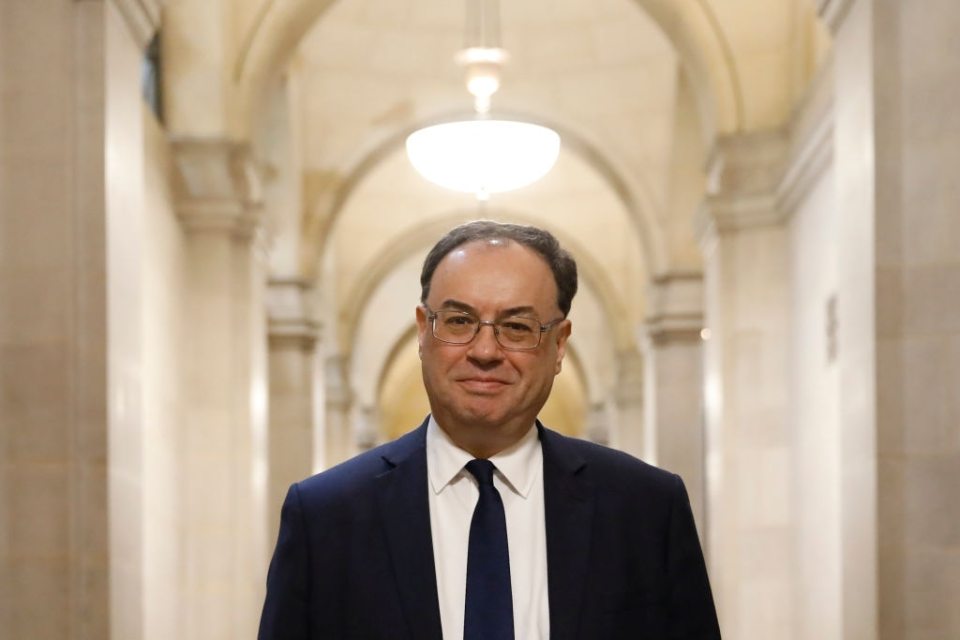
Governor of the Bank of England Andrew Bailey’s message to workers to temper pay demands will probably have the opposite effect.
In essence, Bailey was doing his job as a steward of inflation. But his tone was blunt and lacked nuance.
The burden of the cost of living squeeze – which will erode living standards at the worst rate since comparable records began in 1990 – will fall on lower and middle income Brits who have suffered from weak earnings growth since the financial crisis.
Telling those same people to exercise restraint, when they have been patient for several years, is a bit glib.
The gaffe adds to the list of communication mishaps from the Bank over the past few months.
Although the Bank wants to distance itself from being beholden to investors’ wants, Threadneedle Street undoubtedly plays a role in guiding market expectations.
When the monetary policy committee (MPC) fails to deliver on expectations, its reputation is damaged, meaning future communications can fall on deaf ears.
Let’s unpick what Bailey was trying to say.
The Bank is clearly concerned about so-called “second-round inflation effects”. This basically means a sudden surge in price rises can cause households and firms to scale up their expectations of future inflation, prompting them to demand higher pay and raise prices respectively, thus creating an inflationary feedback loop.
The National Institute of Economics and Social Research put it nicely in their latest forecasts for the UK economy released this week: “A large wage response could have grim implications for underlying inflation in which case the Bank of England’s MPC will be faced with the choice of hiking [rates] quickly and causing a recession or tolerating a prolonged inflation overshoot.”
Put like that, perhaps Bailey was on to something.
As the Bank set out last week, energy prices and labour costs are the main sources of price rises.
Economists are broadly confident gas and oil prices will cool over the coming year. Inflation driven by tension in the labour market, however, is much harder to call.
The UK’s workforce has shrunk since the pandemic struck.
A combination of staffing shortages as travel dried up, built up savings during lockdowns, greater emphasis on work/life balance and older workers taking early retirement has squeezed the labour pool.
Fewer available candidates has strengthened competition between businesses to secure talent, putting upward pressure on wages as employers hike pay to lure new staff and retain existing employees, while workers are exploiting greater bargaining power by demanding higher wages.
A sudden, sharp succession of interest rate hikes from the Bank can unwind this process, but comes at a cost of weaker economic growth.
The main factor of economic conditions monetary policy can influence is domestic demand. Tighter financing conditions tend to reduce spending, weakening incentives for workers to ask for higher pay and businesses to hike prices.
Members of the MPC have stressed they cannot do anything about international supply shocks. But, getting on top of labour market tension before it spirals into a lingering inflation crisis is something the Bank can control.
The trade off though is potentially plunging the UK economy into a period of sluggishness.
A triple whammy of inflation peaking above seven per cent in April, a 1.25 percentage point national insurance hike and a 54 per cent uplift to the energy bill cap is set to erode Brits’ living standards at the worst rate in three decades.
The damning predictions have prompted a wave of economists, including those at the Bank, to downgrade their forecasts for UK growth this year.
Factoring in higher interest rates into that calculation is likely to throttle output further.
It is easy to see Threadneedle Street’s dilemma.
But perhaps if the Bank had launched the rate hike cycle earlier, Bailey would not have had to plead with workers to do the heavy lifting to tame inflation.