
Is National Grid about to pylon investors with green energy spending plan?

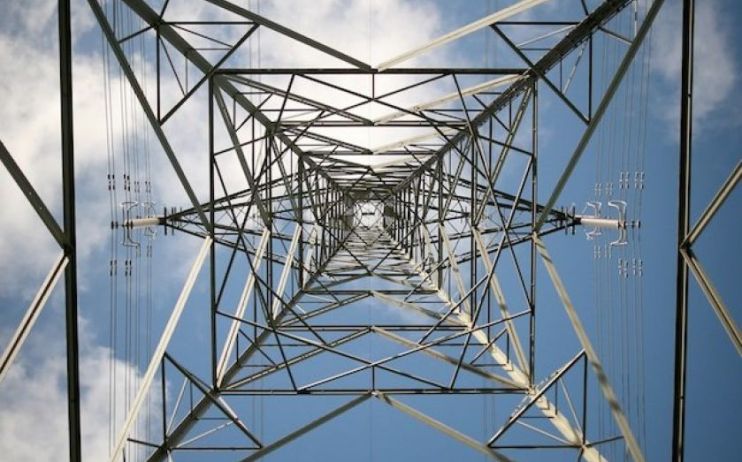
When the National Grid’s cable-laying and pylon-erecting plan to supercharge UK power was published this week, more than a few eyebrows were raised.
The main shock was the price tag—£58bn, nearly double the Grid’s entire market capitalisation.
But where will this money come from, and should National Grid’s investors be concerned?
What does the plan mean for National Grid?
National Grid has been one of the most reliable investments in the FTSE 100 over the past three decades.
And while it will likely never go ‘to the moon’ like those of major technology firms, banks or fossil fuel majors that hold the crown of being the FTSE’s largest dividend payers, National Grid has done a steady job of keeping its investors happy.
The stock currently yields around 5.14 per cent, and it has been a consistent dividend payer, hiking its payout in line with inflation consistently year after year.
Analysts think this growth will continue, having pencilled in a yield of 5.6 per cent and 5.75 per cent by 2025.
Tancrede Fulop, a renewable energy analyst with Morningstar, told City A.M. that continuous investment is a fundamental part of the Grid’s core business plan.
“The dividend has increased every year for 20-25 years, so the core of its business model is more investment and more earning to fuel dividend growth,” he said.
“They will not go for it if it puts the dividend at risk.”
The plans are sitting with energy watchdog Ofgem and the UK government. They will likely remain there for some time, owing to the stringent regulatory periods governing when proposals can be looked at.
Currently, the Grid is within the regulatory period of UK transmission RIIO-2, due to end in 2028.
Fulop believes that it’s unlikely that the plan will be scrutinised until 2026-27 at the earliest and later for suggested edits to be returned to the National Grid.
One note of possible concern for the UK’s electricity provider is its rising debt pile, which, as of March 31st last year, sat at £41bn, more than its market capitalisation.
For the 2024 financial year, an additional £5-6bn of long-term debt will be issued to fund capital expenditure and refinance existing debt.
Though not a point of immediate concern, the debt could raise questions about National Grid’s credit position, not for the first time in recent years.
Back in 2021, agencies S&P, Moody’s and Fitch downgraded the company, stating that its forecast leverage and gearing figures were too weak to justify its previous rating.
But this, contrary to Fulop’s predictions at the time, did not lead to a dividend cut.
Last year, US investment bank JP Morgan said that the Grid could look at curbing dividends as a way of opening up new cash lines for investment but that it was a highly unlikely strategy.
Costs will be passed on
As a regulated utility, the National Grid doesn’t necessarily have the onus of literally building the infrastructure for the nearly 5,000 miles of cabling in the form of “electrical spines” and undersea platforms set out in its report.
Indeed, a spokesperson for the National Grid insisted that Tuesday’s announcement was a “high-level plan” and the £60bn number a private investment figure.
The investment will be passed on to consumers through existing mechanisms, such as TNUoS, and will make up part of the network costs portion of consumer bills.
That means customers will likely be footing the bill.
The Department of Energy Security and Net Zero were tight-lipped when pressed for details on the source of the funding, including what planning sessions were conducted with the Electricity Systems Operator (ESO) to roadmap the payments and exactly when and how much customers can expect bills to rise by.
“These are preliminary plans published by the ESO and any projects taken forward would be required to progress through a robust planning process,” a spokesperson said.
The department and the National Grid’s ESO team did not respond when asked if bill additions could vary regionally based on whether projects would be established near them.
With such a long lead time for the proposals to be consulted and then edited, the plan will likely retreat into the background of energy policy discourse for a while.
But with the ESO set to undergo a big change when it transfers into government ownership this year, large undertakings like the Beyond 2030 Project, their approval processes, and, crucially, estimated costs should be watched closely.