
Advantage or hindrance? Why home comforts can be a burden

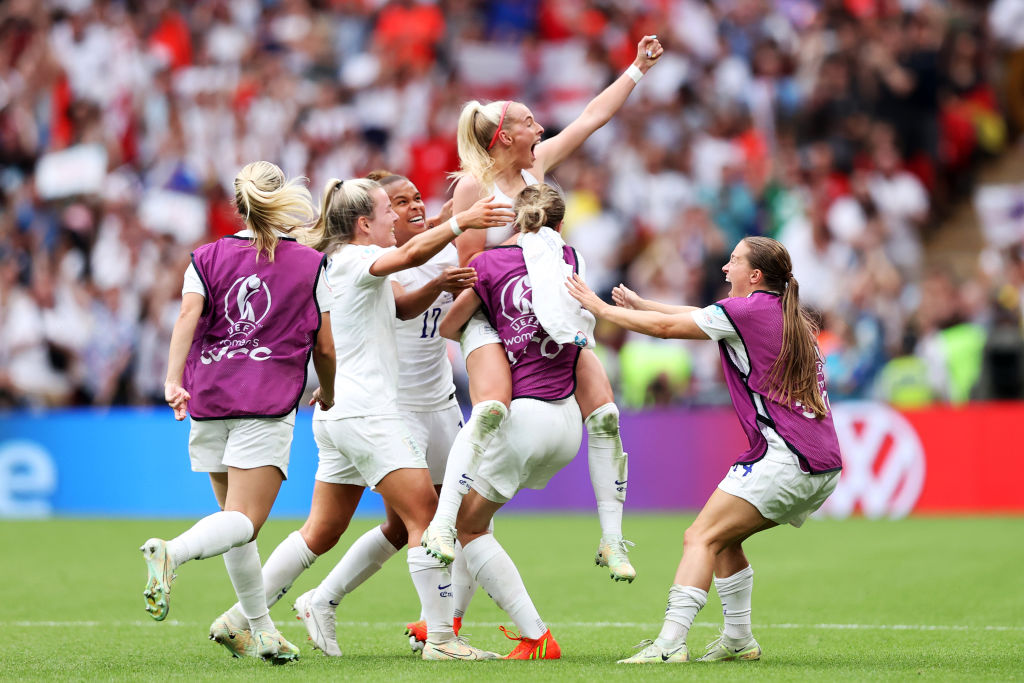
England’s Lionesses surfed a tidal wave of expectation to win the Women’s Euros – a wave that would have engulfed athletes with lesser mental resilience, however great their physical and technical qualities.
Who knows whether they would have triumphed had the tournament been overseas? And who cares? It was on English soil with all the burdens of hope and scrutiny that this entails. Home advantage can just as easily be home disadvantage.
Academics studying the effects of behind-closed-doors football during the Covid pandemic have concluded that home advantage is dampened (but not eradicated) in the absence of a crowd.
But analysis of the top European men’s leagues is, of necessity, scrutinising players who – whether through natural selection or training – are able to feed off their own supporters’ energy rather than be crushed by it.
The record crowd at Wembley for the final on Sunday represented a rare and challenging environment for the players, not simply a scaling up of their usual matchday experience.
Ten years ago I sat on a tube train after a midweek athletics session at the London Olympics in which leading British medal hopes had fizzled out.
Only days after the triple gold triumph of Super Saturday, as chair of UK Athletics I found myself texting our chief executive to say that if Mo Farah didn’t win the 5,000m at the weekend then we might have to fall on our swords. Too many of our hopefuls weren’t rising to the occasion.
I was surrounded in the carriage by exuberant spectators who had enjoyed a fantastic evening of sport, and who were oblivious to the microcosmic part each was playing in weighing down their favourites with expectation.
Our head coach had been alive to the risks of home hoopla and had taken the GB athletics team to Portugal for its pre-Games holding camp rather than the Aldershot base preferred by the British Olympic Association. Not only was the weather warmer but the media spotlight was dimmer.
It all came good in the end, Britain finishing third in the athletics medal table and fifth in the placing table. But in truth, I sensed little home advantage at the time and many drawbacks with hindsight.
Two years out from Paris 2024, the usual pre-Olympics scare stories are doing the rounds – about budgets, security and general preparedness. I’ve no doubt all will be right on the night, albeit with the time-honoured overspend.
France, though, should be very worried about its chances in the sport itself. The nation’s athletes failed in Tokyo to deliver the upswing in medal success enjoyed by future hosts in the preceding Games. And with one year fewer between Olympics due to Covid, time is fast evaporating in which to engineer an improvement.
The history of Britain’s successful lottery-funded investment in Olympic and Paralympic sport has been well trawled. It is not unique, being inspired by Australia’s approach to Sydney 2000. The effect was a big jump at Beijing 2008 and sustained success since, and contrasts starkly with France’s slide in medals won in Tokyo to a level not seen since Barcelona 1992.
France’s recent record in the marquee sports should be of particular concern. It won only four medals in athletics, cycling and swimming combined last year. For a nation of cyclists, the long term decline in success on two wheels must be especially galling.
Of course, each country has its own idea of what might constitute a marquee event, based in large part on its own medal history.
Yes, France traditionally excels at handball, which will doubtless loom large in its media narrative in the summer of 2024. But almost a fifth of the nation’s medals in the past three Games have come in judo. Not to decry the sport, but President Macron will want to be seen with French medallists in more places than just the dojo.
You can’t beat the Baroness
In the corner of my TV, squeezed into the melee surrounding the Lionesses on the victory platform, I briefly caught a glimpse of Baroness Sue Campbell, director of women’s football at the Football Association.
This was no John Terry 2012 Champions League final moment, when the suspended Chelsea captain risibly stripped from suit into kit to join the trophy celebrations. Campbell has been the ultimate architect of England women’s success and deserves all the plaudits coming her way, rightfully deserving of her place on the top step.
It was Campbell too who was the public face of UK Sport’s “no compromise” pursuit of Olympic and Paralympic medals leading up to London 2012. In all my encounters with her at the time I found her to be empathetic and charming but steely in the resolve that underlay UK Sport’s highly targeted investment strategy.
Last week, the designer of that strategy, Peter Keen, gave a remarkable interview in which he expressed regrets. “I would happily trade it all — the medals, the records, the Super Saturdays, the gongs — for a thriving, safe and inclusive national competitive sport system,” he said.
Keen says he declined to appear in last year’s BBC Gold Rush series looking back at the London Games. (I did take part, as one of the chosen naysayers about UK Sport’s approach). He has concluded that sporting systems must be designed to be sustainable.
I’ve no idea how Sue Campbell looks back on the road to 2012 now, but I’ve no doubt that she and her colleagues are focused on ensuring that female football in England grows and strengthens from the grassroots up. Much to be excited about, but much still to do.
Ed Warner is chair of GB Wheelchair Rugby and writes at sportinc.substack.com