
A New Era of Saudi-U.S. Strategic Partnership

Shahad Alsubaie – Inside Saudi
How Vision 2030 and the 2025 Saudi-US Investment Forum Are Redefining Bilateral Cooperation, Innovation, and Global Economic Leadership
The Saudi-U.S. Investment Forum 2025 represents a transformative milestone in bilateral relations, with the execution of 145 deals totaling over $300 billion in bilateral investments. It reflects a shift from transactional ties to a comprehensive partnership grounded in geopolitical mutual interests and long-term collaboration across key sectors.
This evolution can certainly be seen as a consequence of the Saudi Vision 2030, Saudi Arabia’s ambitious strategy led by His Royal Highness Crown Prince Mohammed bin Salman, aimed at diversifying the Kingdom’s economy beyond oil. By accelerating growth in technology, renewable energy, mining, and logistics, Vision 2030 seeks to drive sustainable development, job creation, and global economic integration underpinned by enduring cooperation in innovation, defense, and infrastructure.
A key element in this partnership is the reaffirmed Saudi-U.S. defense relationship. As the largest Foreign Military Sales (FMS) partner, with active cases exceeding $129 billion, Saudi Arabia and U.S. signed landmark defense deals under President Trump, reflecting a deeply shared commitment to regional security, mutual defense objectives, and significant industrial collaboration. This growing defense relationship supports Saudi Arabia’s localisation goals under Vision 2030 by strengthening its capabilities and inviting broader U.S. industry participation. This synergy is visible across sectors such as advanced manufacturing, AI, critical minerals, and digital infrastructure, where joint ventures promote resilience, job creation, and innovation.
Transformative giga-projects like NEOM, King Salman Energy Park (SPARK), Jazan Economic City, and Riyadh Tech Valley vividly embody Saudi ambitions, aiming to become global hubs in defense, energy, and technology innovation. NEOM, a $500 billion smart city, emphasizes AI, robotics, and dual-use defense tech through its Oxagon district. SPARK serves as an industrial hub for energy and manufacturing localisation. Jazan enhances refining and logistics, bolstering strategic mobility, while Riyadh Tech Valley and KACST lead R&D in cybersecurity and aerospace. These initiatives attract investment, generate high-value jobs, and position Saudi Arabia as a global leader in future industries.
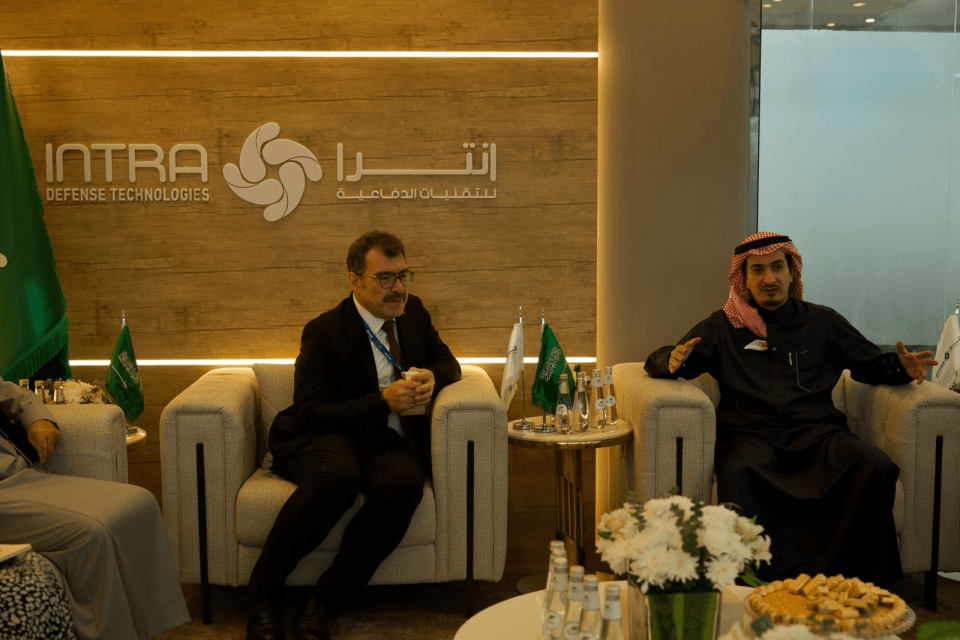
Salman Nasser Al Shathri (SNS), Chairman of the National Committee for Military Industries (NCMI) and Founder and Chairman of Intra Defense, plays a key role in shaping the Kingdom’s defense sector and shared with Inside Saudi his views about the President of United States recent visit to Riyadh.
Mr. al Shathri, how do you see the Saudi-U.S. economic relationship evolving in 2025, particularly in light of President Trump’s visit? What new opportunities are being prioritised by the Chamber to deepen bilateral trade and investment?
The Saudi-U.S. economic relationship is definitely strengthening in 2025. President Trump’s recent visit, which focused on key sectors including defense, artificial intelligence, digital infrastructure, and healthcare, brought to Riyadh some of the most representatives global leaders across these industries to engage with leading players in the Saudi market. These strategic collaborations are instrumental in accomplishing Saudi Arabia’s Vision 2030 goals to diversify the economy and drive innovation, reinforcing both nations’ commitment to deepening trade ties and leading in technological and economic advancement.
What concrete steps is the National Committee for Military Industries undertaking to enhance the Saudi private sector’s engagement in international partnerships, particularly within the defense and security industry, including areas such as advanced manufacturing, technology development, and critical logistical support?
Obviously, the National Committee for Military Industries is actively fostering international collaborations to bolster the Kingdom’s defense sector. Through initiatives led by the General Authority for Military Industries (GAMI), efforts are underway to localise advanced manufacturing, technology development, and logistical support. These endeavours include joint ventures with global defense firms, participation in international defense exhibitions, and the establishment of specialised training programs to enhance local expertise. Such strategic moves aim to integrate Saudi private enterprises into global defense supply chains, aligning with the objectives of Vision 2030 to diversify and strengthen the national economy.
What sectors in the Kingdom are most attractive to U.S. investors right now and how is the Saudi Chamber helping to remove regulatory or logistical barriers to accelerate American business entry into Saudi markets?
U.S. investors are increasingly drawn to Saudi Arabia’s defense, technology, renewable energy, healthcare, and tourism sectors, because Saudi Arabia is one of the fastest growing markets globally and because, thanks to the Saudi Vision 2030, our country has built the legal, financial and physical infrastructure that will allow FDI inflow to grow exponentially over the next decades. The Saudi Chambers is facilitating engagement with foreign investors by streamlining business licensing, enhancing transparency, and offering incentives within Special Economic Zones to ease market entry. Collaboration with U.S. firms in AI, cloud computing, and biotech are being actively promoted through joint ventures and public-private partnerships. These efforts are designed to foster a more accessible and investor-friendly environment for American and global businesses to enter the Saudi market and participate to our country’s growth.
Can you share examples of current or upcoming Saudi-U.S. joint ventures that are expected to significantly contribute to job creation in both countries, particularly in high-value industries?
Several Saudi-U.S. joint ventures are poised to significantly boost employment in both nations, particularly within high-value industries. The establishment of Humain, an AI firm backed by Saudi Arabia’s Public Investment Fund, has led to collaborations with U.S. tech giants like Nvidia, AMD, and Amazon Web Services, focusing on AI infrastructure and services. In the critical minerals sector, MP Materials and Saudi Arabia’s Maaden are partnering to develop rare earths’ supply chain, aiming to support advanced technologies such as AI and electric vehicles. Additionally, the collaboration between NEOM and logistics leader DSV is set to transform supply chain operations, creating substantial job opportunities and aligning with Saudi Arabia’s Vision 2030 objectives.
What roles do small and medium-sized enterprises (SMEs) play in the Chamber’s international strategy, and how are you facilitating collaboration between Saudi and U.S. SMEs to strengthen supply chains and innovation?
Partnerships in advanced technologies are linking American innovation with Saudi investment and infrastructure including Saudi based SMEs Collaborations in AI development and supply chain modernisation are particularly strong, supporting long-term workforce growth. These ventures reflect a shared commitment to innovation-driven industries under broader economic transformation goals and Saudi SMEs are deeply involved with this stream of development.
Considering Vision 2030’s strategic objectives for Saudi Arabia’s defense capabilities, what systemic transformations and policy enhancements are required to not only generate greater intrinsic value but also to ensure the sector’s dynamic growth and increased fortitude?
I believe that the National Committee for Military Industries can play a key role in fine tuning national defense priorities with Vision 2030 goals. Systemic transformation requires decisive action across three key areas fostering R&D, incentivising private sector participation, and modernising procurement policies. Encouraging public-private partnerships will help integrate innovation and accelerate capability development while Enhancing regulatory frameworks and export controls can position the sector for international competitiveness. The kingdom needs to continue investing in specialised education and workforce development is key to sustaining growth and resilience. Such reforms will generate intrinsic value while reinforcing the defense sector’s strategic autonomy and adaptability.