Skip to content
Tuesday 28 July 2026London --:--Frankfurt --:--Zurich --:--
NewslettersSearchEN · DE
City PM

European business, markets and politics

FTSE 100
10,827.25
+0.42%
DAX
25,379.75
+0.07%
CAC 40
8,415.08
+0.11%
STOXX 50
6,268.80
-0.21%
  • Europe
  • Markets
  • Business
  • Economy
  • Technology
  • Politics
  • Opinion
More
GermanyFranceBankingAIEnergyFintechPropertyCapital Markets
  • Germany
  • France
  • Europe
  • Markets
  • Business
  • Economy
  • Technology
  • Politics
  • Opinion
  • DE
Wednesday 24 February 2016 4:38 am

What game theory tells us about David Cameron’s EU deal

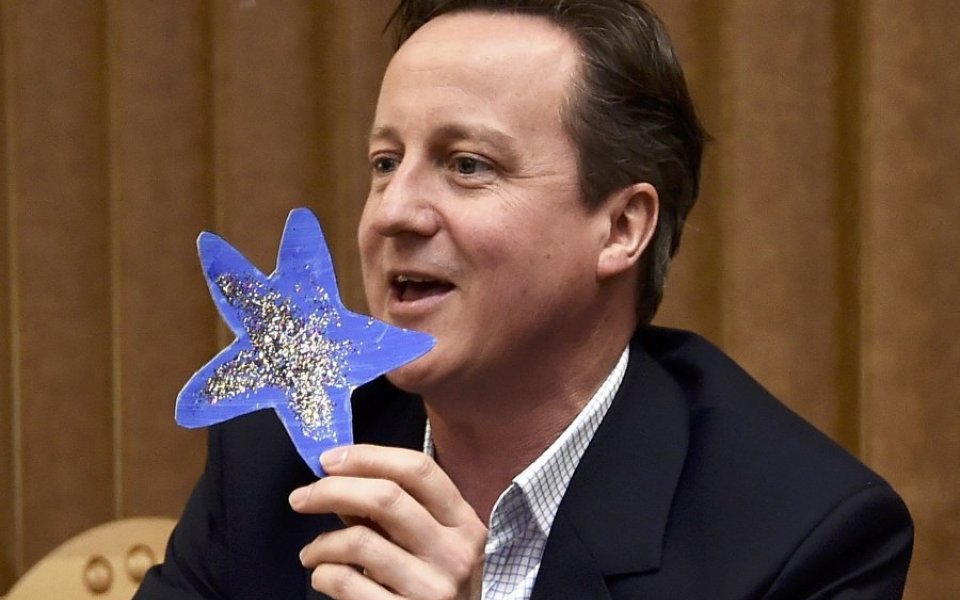
By: Harriet Green

Add as a preferred source on Google

Game theory is the study of how rules and tactics affect outcomes, and it is pervasive in academic economics. The opening sentence of one of the economics courses at Cambridge pontificates: “Optimal decisions of economic agents depend on expectations of other agents’ actions”. Translated into English, this means that, for someone in a negotiating situation to get the best possible outcome, he or she needs to take account of how the other side might react. It sounds pretty obvious.

But the maths of game theory soon gets hair-raising. Would David Cameron have done better in Brussels if he had mainlined on straight economics at Cambridge rather than dallying with PPE at Oxford?

Game theory has had some spectacular successes. In 2000, the UK government held an auction for licences for the new 3G mobile phones spectrum. Economists Ken Binmore and Paul Klemperer were commissioned to design the structure. The auction raised no less than £22.5bn for the Treasury, five times more than had been expected, and it was widely described as the biggest ever auction. Binmore and Klemperer were more modest, pointing out that, adjusting for inflation, in 195 AD the sale of the entire Roman Empire by the Praetorian Guard netted more cash.

The theory was really useful in this context, where there was a limited number of players, all of them highly sophisticated companies such as Orange and Vodafone. The companies themselves employed teams of economists and had a lot of information about their rivals and the sorts of moves they might make.

But, somewhat paradoxically, when dealing with less rational decision-makers, knowledge of game theory can be a decided handicap. A well known game is the so-called Beauty Contest. The rules are simple. Each one of a group of people is invited to select their own confidential number between, say, zero and 100. The winner is the one who chooses the number closest to the number which is half (or some other fraction) of the average of all the numbers chosen.

If you assume everyone else is rational, as was reasonable in the spectrum auction, the number to choose is zero. The logic is: suppose the average is going to be 40, then I should choose 20. But this means everyone else will choose 20, so I should choose 10, and so on. The problem is that you do not know how sophisticated the other players are. The smart game theorist will lose every time by opting for zero when playing in real life. If you are playing with economists, by all means choose zero. But in experiment after experiment, most people do not, even in repeated plays of the game. To win, you have to judge the levels of rationality of your opponents.

At a political gathering in Brussels, this is self-evidently a challenging task. In addition, the complexity of the game makes formal analysis difficult. There are 28 players, each operating from a fluid set of motivations. Maybe the worldly wisdom of PPE at Oxford was the best training for Cameron after all.

Share this article

  • Facebook
  • X
  • LinkedIn
  • WhatsApp
  • Email

Similarly tagged content:

Sections

  • Opinion

Categories

  • Opinion

Trending Articles

  • Big Four’s AIM exodus accelerates as mid-tier firms seize mandates

  • FTSE 100 firm agrees £5.7bn takeover in latest private equity swoop

  • Burnham backs plan to pump £1bn pension funds into start-ups

  • Scotland’s tax hike may have backfired as receipt falls

  • As it happened: Stocks rise; oil falls after Trump pauses Iran strikes

More from City PM

  • Burnham’s cheerfulness could turn the economy around

    Opinion
    Andy Burnham laughing outdoors in a candid moment, May 2026, capturing a lighthearted political event atmosphere.
  • Will the Nations Championship financially underdeliver for in-need Fiji?

    Sport Business
    Getty Images logo displayed prominently on a digital screen, symbolizing the brands visual content prowess and media prese...
  • Atlanta set for major economic boost as England World Cup fans spend

    Sport Business
    Breaking news illustration with digital world map and stock market graphs, highlighting global economic trends.
  • Sweeping job cuts at GSK to fund £400m Cambridge campus

    Pharma
    Modern GSK Cambridge campus buildings with sky bridge, green spaces, and people walking and cycling.
  • We should all get behind this wealth tax

    Opinion
    LONDON, ENGLAND - JUNE 01: A general view of a house along Kensington Palace Gardens, which has been named as Britain's most expensive street on June 1, 2011 in London, England. Many of the mansions are occupied by billionaire businessmen, embassies and ambassadorial residences. (Photo by Oli Scarff/Getty Images)
  • I’m 60, please don’t give me a Freedom Pass

    Opinion
    Close-up of a blue Oyster card against a white background, highlighting its role in public transportation payment systems.
  • Miami heat: Why climate could be key in 40C England v Norway World Cup quarter-final

    Sport Business
    Business professionals discussing strategies in a modern office setting with charts and graphs on a large screen in the ba...
  • Devolution is the shakeup Britain needs

    Opinion
    Andy Burnham speaking passionately at a public event, wearing a suit, highlighting his role as a prominent political figure.
CityPM

Independent European business, markets and political news for decision-makers.

Morning Briefing

Europe

  • Germany
  • France
  • Europe
  • UK & Ireland

Business

  • Markets
  • Banking
  • Technology
  • Energy
  • Property
  • Fintech

Editorial

  • Opinion
  • Editorial Policy
  • Corrections
  • Contact

Company

  • About City PM
  • Privacy Policy
  • Terms of Use
  • Cookie Policy
© 2026 City PM Ltd · Published by CityPM Media, Bahnhofstrasse 65, 8001 Zürich, Switzerland
Privacy · Terms · Cookies · Facebook