
Breaking the banks: Why are shareholders bailing out?

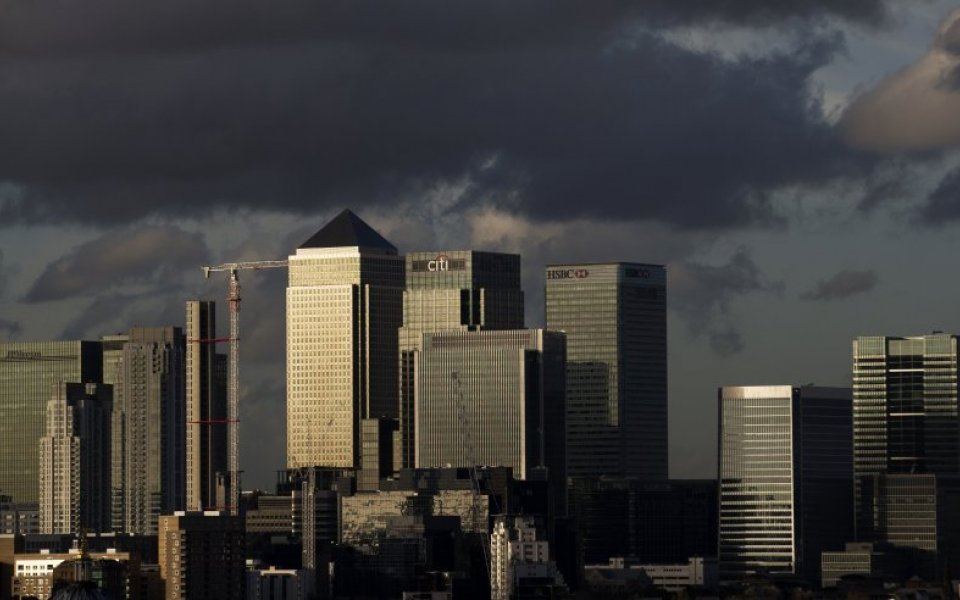
The share prices of Europe’s biggest banks are now being discussed in historical terms. Deutsche Bank’s share price has dipped beneath its financial crisis nadir and its convertible bonds have plummeted. Standard Chartered’s stock is at its cheapest in nearly 20 years, joined in the carnage by the other major UK banks – HSBC, Lloyds, Barclays and RBS.
The fall has been precipitous. Since the beginning of 2016, the Stoxx Europe 600 Banks Index, which measures the prices of European banks, has lost 27 per cent. David Buik, market commentator at Panmure Gordon, has observed that, dividends aside, anyone who had invested in banks a decade ago would have nothing to show for it today.
“The sector faces arguably its biggest challenge since the financial crisis,” says Simon French, chief economist at Panmure Gordon. Question marks loom over the strength of the global economic recovery and the creditworthiness of emerging market borrowers, hampering institutions which have their own legacy issues to deal with.
So why are shareholders fleeing, and what is the investment outlook for banks?
PERSONAL PROBLEMS
Many banks are still settling cases around loans issued before the financial crisis. At the weekend, for example, it was announced that HSBC would have to shell out more than $370m to borrowers and homeowners and $100m in fines to the US authorities. Banks in general face a slew of other open investigations and, despite assurances that reserves had been set aside to cover the cost, the market hasn’t been convinced. Historic problems also continue to weigh. Doubt was cast over Lloyds Bank’s plan to give shareholders a “special” dividend payout last week after analysts at Shore Capital, Barclays and Jefferies predicted that it would have to increase its allocation for PPI compensation by an extra £2bn.
And a number are still rebalancing away from operations which played a large role in the financial crisis and which have become unprofitable. Following the lead of UBS and Barclays, Deutsche Bank has scaled back and cut its client base, and Credit Suisse has announced that it will retreat from capital intensive areas, to generate more fees from its advisory and underwriting operations. Both are feeling the pain of adjusting, suffering huge sell-offs in their shares and bonds after posting large losses in recent weeks.
EMERGING MARKET EXPOSURE
Investors are also worried about where banks have been lending. With growth in developed countries sluggish after 2008, banks like Standard Chartered poured into emerging Asian and African economies, fuelling a six-year debt binge. Borrowers are struggling to service loans as the prices of commodities like oil, gas and coal have fallen and the dollar has risen.
Barclays has been urged to call time on its banking unit in Africa, for example, which employs 44,000 people. Operating mainly in South Africa, chief executive Jes Staley has been told that the risks outweigh the benefits of operating in a country mired in political uncertainty, and afflicted with a falling currency and mineral prices.
A number of the banks are pledging job cuts and are scaling back their exposure to these higher risk areas, but the damage may already have been done. “With the performance of mining companies, the emerging market feedback loop is starting to weigh on the banking sector,” says Chris Beauchamp, senior market analyst at IG Group.
RATES AND REGULATIONS
Interest rates are another inconvenience. Last year’s consensus view that the Bank of England would follow the US Federal Reserve’s lead and raise its benchmark interest rate has altered markedly as equities have been sold off around the world. In the last fortnight, rhetoric from Bank governor Mark Carney suggests that rates will remain at 0.5 per cent for quite some time to come.
This is a problem for banks because the margins between the rates at which they can borrow and lend will remain slim. Negative interest rates on the continent mean that it is costing banks to keep cash on their balance sheets. It is hardly surprising that investors are not sold on their ability to generate high returns in this environment.
This has undermined the view that dividend yields on bank stocks will go up any time soon. “The overall dividend cut rate is running higher than in 2008,” says Beauchamp. And it’s not only dividends which look vulnerable; so do the coupons on contingent convertible debt held by bond funds. “For investors seeking ‘boring’ income, the downside risk is manifestly higher for the banking sector in the current cycle,” says French.
“Bail in” rules are also making banks look unattractive. The EU has laid out a directive which ensures that shareholders and debt holders bear an “appropriate share” of the losses if a bank fails, to ensure it prices in such risks when times are normal. But French thinks that there is a risk around the opaqueness of these bail in arrangements.
Shareholders will no doubt be less thankful than taxpayers for the regulator’s efforts to make them more responsible for cleaning up a bank’s financial problems.
BEEFED UP BUFFERS
Stricter regulation following the financial crisis has meant that banks are having to build bigger war chests, known as capital buffers, to stave off a default in the event of a future crisis. Compliance with ringfencing requirements is also proving costly. And investors are fearful that this will dent profits. Barclays shares fell 5 per cent in October on the announcement that ringfencing would cost it £1bn over the coming years.
There are some obvious advantages, however, to being better capitalised. “Institutional investors use capital buffers as one of their key measures,” says Beauchamp. “Given the choice, a large institution might go for the bank with the higher buffer, even if the investment case isn’t as strong.”
Commercial and household lending conditions are still loose, but could the impact of poor share performance damage the banks’ ability to lend? “The longer bank shares are under pressure,” says French, “the greater the risk that credit conditions will gradually tighten.”