Skip to content
City PM
  • Germany
  • France
  • Europe
  • Markets
  • Business
  • Opinion
  • DE
  • Germany
  • France
  • Europe
  • Markets
  • Business
  • Opinion
  • DE
Monday 23 November 2015 3:49 pm

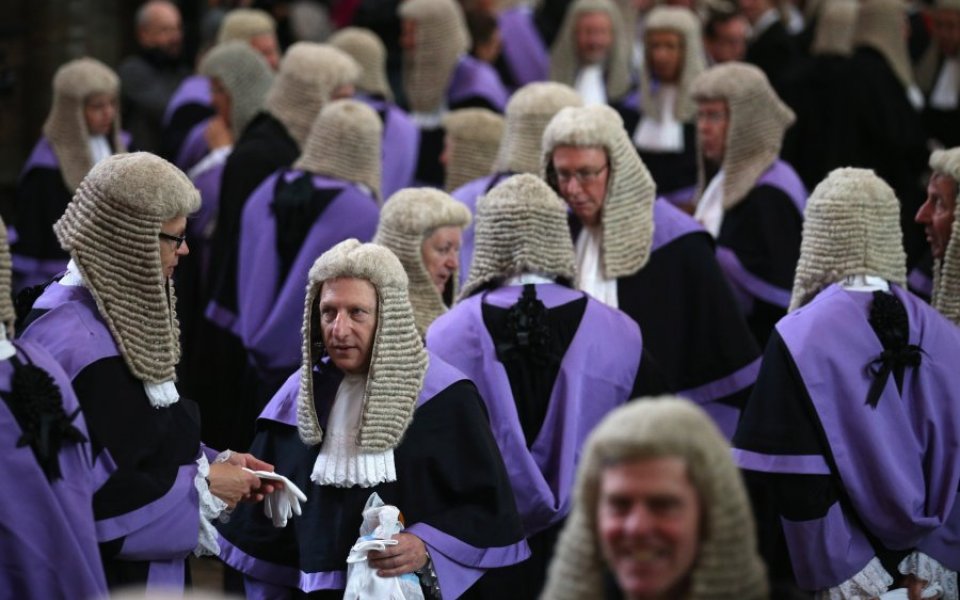
Three-quarters of top judges are privately educated, compared to seven per cent of the population overall, raising concerns over diversity and social mobility in the legal sector

By: Hayley Kirton

Add as a preferred source on Google

Three-quarters (74 per cent) of top judges, defined as those who sit on the High Court and the Court of Appeal, received a private education, compared to just seven per cent of the UK population overall.

A report by the Sutton Trust and PRIME – an alliance of more than 80 UK law firms and legal departments, set up to offer work experience to young people from less privileged backgrounds – published today discovered that this figure is lower for solicitors as a whole, with 32 per cent of partners at firms having gone to a private school, although this rises to 41 per cent for London firms.

In a YouGov poll, more than half (52 per cent) of senior figures in the legal industry said that improving social mobility in the profession would be beneficial for their firm.

“Today’s findings, in particular the worrying fact that the high proportion of privately educated judges has barely changed since the 1980s, warns us that there is still a big social mobility problem within the legal sector,” said Sir Peter Lampl, chairman of the Sutton Trust and of the Education Endowment Foundation.

David Morley, chairman of PRIME and senior partner at Allen & Overy, added: “The research shows that a large part of the responsibility for solving this issue lies with law firms, so we need to ensure they attack the problem with the energy and enthusiasm it deserves.”

The research comes ahead of the PRIME conference on Wednesday, where social mobility within the legal sector will be discussed.

An article recently published in The Modern Law Review by Dr Michael Blackwell, assistant professor of law at the London School of Economics and Political Science (LSE), discovered that male Oxbridge-educated barristers from London chambers are still more likely to be made a Queen’s Counsel (QC), despite the appointments system being reformed in 2004.

“Reforms to the QC appointments system were introduced to address concerns that the old system of secret soundings unfairly disadvantaged groups such a women and those who were not part of a well-connected elite, eg non-Oxbridge graduates,” remarked Dr Blackwell. “Given this, it is very surprising that in the post-reform period the estimated partial effect of gender remains substantively large.”

Share this article

  • Facebook
  • X
  • LinkedIn
  • WhatsApp
  • Email

Similarly tagged content:

Sections

  • Markets & Economics
  • News

Categories

  • Business
  • Economics

Trending Articles

  • Why Fifa World Cup players are drowning in commercial red tape

  • Europe has made a ‘major mistake’ on slow electrification, IEA chief warns 

  • Sadiq Khan lobbies Burnham to appoint Miliband as Chancellor 

  • Apple sues Open AI accusing them of stealing ‘trade secrets’

  • Will the Nations Championship financially underdeliver for in-need Fiji?

More from City PM

  • Global Millionaire Population Jumps by Nearly 2 Million in 2025, Driven by Strong Stock Market Performance Worldwide

    Business Wire
  • Ex-Lush chief’s lawyers hike costs to ensure their AI model isn’t trained by juniors

    Legal
    Law firms are increasingly deploying AI
  • LLPs remain under watchful eye – especially from the taxman

    Legal
    Tax documents and calculator on a desk, symbolizing financial planning and tax preparation for businesses and individuals.
  • The UK’s legal system brings the world to London in search of a fair deal

    Opinion
    The Royal Courts of Justice
  • Hacking scandal? Inside Prince Harry’s costly legal battle over privacy

    Media
    Associated Newspapers, which is owned by Lord Rothermere's Daily Mail and General (DMG Media), said losses ballooned from £699,000 in 2022 to £44.5m in the year ended 1 October 2023
  • ‘Streets ahead’ – London aims to wear the legal AI crown

    Legal
    GettyImages 2244121938 displaying a professional business meeting with diverse executives discussing strategic plans in a ...
  • One in three defence firms ‘can’t find graduates to hire’ 

    Industrials
    Oxford University spinouts showcasing innovation and entrepreneurship in a business setting
  • City watchdog suspends parts of £9bn motor finance scheme after industry backlash

    Banking
    The FCA has appointed Liam Coleman interim chair of the FOS.

City PM — European politics, business and analysis.

Europe

  • Germany
  • France
  • Europe
  • UK & Ireland

Topics

  • Business
  • Markets
  • AI
  • Technology
  • Opinion
  • Energy

More

  • Politics
  • Economics
  • Fintech
  • Legal
  • Sport
  • Life

Company

  • About City PM
  • Editorial Policy
  • Corrections
  • Contact
  • Terms of Use
  • Privacy Policy
  • Cookie Policy
© 2026 City PM · Published by CityPM Media, Bahnhofstrasse 65, 8001 Zürich, Switzerland
About · Editorial Policy · Corrections · Contact · Privacy · Facebook