
Commuters need a radical privatised solution to cut through the rail blob

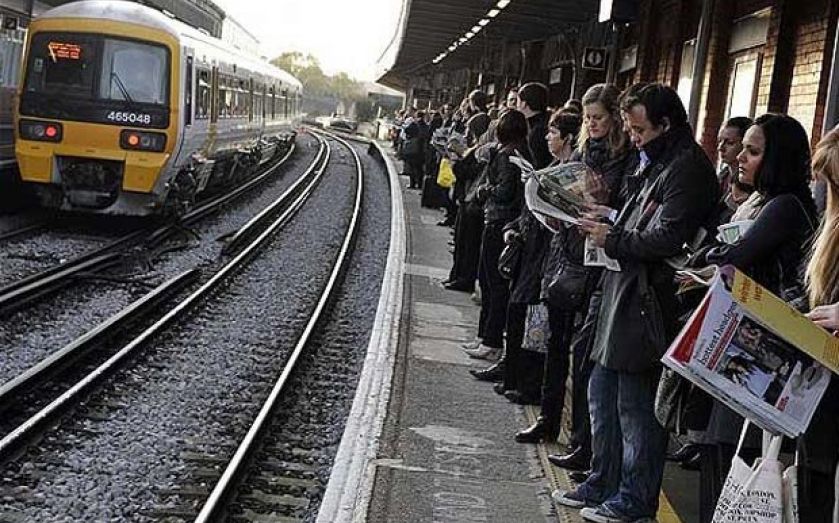
THE ANGRY reaction to this week’s announcement of inflation-beating fare rises shows just how little the current train franchise system has succeeded in winning the hearts and minds of travellers. Incomplete privatisation has left us between two stools, with the result that calls for renationalisation grow louder every year.
The long-term solution, however, lies not in state ownership, but in putting the trains, tracks and stations fully back into private hands and beyond the reach of government. This could herald the return to the subsidy-free and profitable system we had in the 1930s, but overseen by a twenty-first century regulator.
In defence of the train operating companies, their record in raising investment capital, increasing passenger journey numbers, and improving services has been far in excess of what the old nationalised British Rail could ever have delivered. Making up for nearly half a century of badly-directed investment, which coincided with a massive expansion of car ownership and domestic air travel, was always going to be an arduous challenge for these firms.
Some progress has been made. Although they remain high, taxpayer rail subsidies are starting to fall, at £4bn in 2012-13, down from a peak of £7bn a few years ago. And more can certainly be done to publish real-time data on capacity per train, delivering better pricing structures which reduce over-crowding. Freight has been the most successful element of privatisation – now subsidy free and competitive.
But there can be no serious discussion about the UK’s trains without addressing the large and growing net debt of Network Rail – the body that owns and operates Britain’s rail infrastructure. In 2004, its net debt stood at £15bn. Today it is £32bn. It has recently been added to the government’s balance sheet and is forecast by the Office for Rail Regulation to grow to £50bn by 2020. By 2029, one-third of Network Rail’s budget will be spent on debt repayments.
This has only been able to happen because the interests of the train operators – as non-owners of the infrastructure – are not aligned with the cost-effective use of the track, and there is little commercial pressure for Network Rail to bring this debt under control. Setting track access charges on a much more commercial basis would be a useful start.
But standing in the way of reform is a rail bureaucracy that gets between the train companies and their customers, turning the franchise holders more into government-facing than customer-facing organisations. This “rail blob” is a coalition of civil servants, railway unions, engineering companies, train builders, lawyers and consultancies, who draw up hugely complex contracts, micromanage, over-engineer and often fail to see beyond their sectional interests. Apart from having very high transaction costs, the franchise system strengthens the ability of government to meddle, and stifles the opportunity for price discovery, investment and innovation within a franchising period.
Confronted with this complexity, there is a radical solution. In exchange for auctioning, selling off or even giving away the track and stations of Network Rail to the train operators, government could write off the outstanding debt and reduce annual subsidies to zero.
This would be a bold move, establishing regional monopolies which own the tracks and run the services. But everything we have tried since the 1930s has been flawed. Going back to what worked well then is worth a try.