Skip to content
City PM
  • Germany
  • France
  • Europe
  • Markets
  • Business
  • Opinion
  • Germany
  • France
  • Europe
  • Markets
  • Business
  • Opinion
Friday 20 June 2014 9:06 am  |  Updated:  Thursday 06 June 2019 12:26 am

Did the big bang happen? Scientists call theory into question
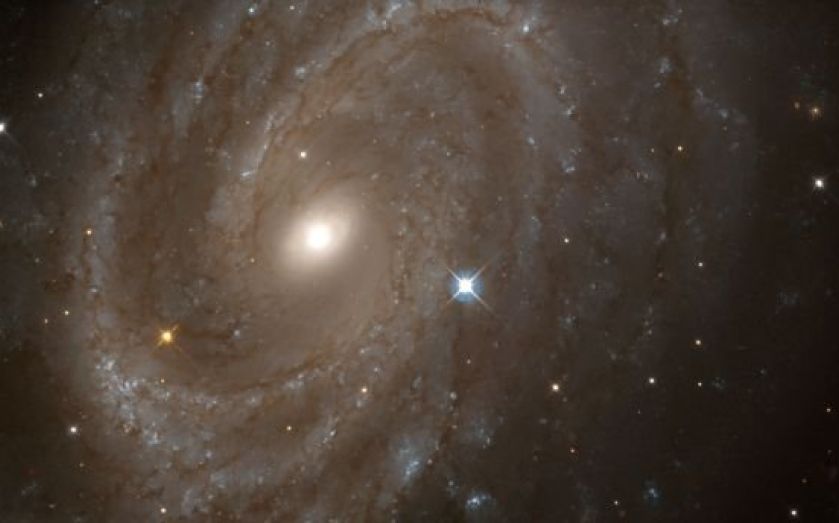
The big bang: it is supposedly the cause of our existence, the scientific explanation for everything that is and everything that isn't. But scientists now say that some of the evidence for it is flawed.
 
One of the concepts at the heart of the big bang theory is that of cosmic inflation, which says that the universe experienced exponential growth in its first trillionth of a trillionth of a second of existence, and that it has continued to expand ever since.
 
To test out the theory out, a group of scientists went to the south pole on a mission called the BICEP2 collaboration, where they used a telescope to detect the oldest light that can be observed from anywhere in the world.
 
If cosmic inflation is indeed how the universe started, it means that there must be cosmic background radiation in the sky: waves of gravitational energy that offer clues about what happened in the ancient past. 
 
Earlier this year, the scientists claimed that they had found the signal they had been looking for: a pattern in the sky, caused by radiation, which was indicative of cosmic inflation. 
 
Now many scientists are questioning their results, saying that their research is flawed. The problem, they claim, is to do with the way in which the waves were analysed: gravitational waves from inflation create a very distinctive polarisation pattern, but these can easily be confused with polarisation effects caused by nearby dust in our galaxy. 
 
This is of particular concern following the release of new information by scientists working on the European Space Agency's orbiting Planck telescope, which has shed light on the extent of dust polarisation in the Milky Way.
 
Some of those involved in the study are now also coming forward and expressing doubt about the results. Clem Pryke from the University of Minnesota, a principal investigator in the mission, confirmed at a public lecture at University College London that circumstances have changed.
 
"Has my confidence gone down? Yes," he said. "Real data from Planck are indicating that our dust models are underestimates. So the prior knowledge on the level of dust at these latitudes, in our field, has gone up; and so the confidence that there is a gravitational wave component has gone down."
 
The team released details of the study in an official journal yesterday. In it, they said that, while they stand by their work, there are still questions that need answering. “Our models are not sufficiently constrained by external public data to exclude the possibility of dust emission bright enough to explain the entire excess signal," they confirm. 
 
They say that further data, being released at the end of the year, will be needed before they can draw any more conclusions.
 

Share this article

  • Facebook
  • X
  • LinkedIn
  • WhatsApp
  • Email

Similarly tagged content:

Sections

  • News

Categories

  • Business

Trending Articles

  • Two solicitors linked to Post Office scandal charged with misconduct

  • Revealed: Secret Treasury plan to tax State Pension before it is paid out

  • Clarkson’s Farm and why businesses must stop blaming the weather

  • As it happened: Stocks tumble after Apple rattles global markets; UK food exports hit by US tariffs

  • Barclays and Lloyds join banking sector plan for digital ID

More from City PM

  • Streeting attacks Burnham’s pledges as ‘appeal to party at expense of Brits’

    Politics
    Wes Streeting, British politician, delivering a speech at a press conference with a focused expression and engaging the au...
  • Badenoch: City’s risk culture should be ‘championed’ to boost UK growth

    Politics
    Kemi Badenoch speaking at a podium during a press conference, addressing recent policy changes and business initiatives.
  • Hult Launches Credit-Bearing AI Lab Across Graduate Programs

    Business Wire
  • Conservatives will slash the regulations holding the City back

    Opinion
    Kemi Badenoch discussing strategies for a stronger economy at a business conference podium, emphasizing economic growth
  • Book review: The Reverse Centaur’s Guide to Life After AI by Cory Doctorow

    Life&Style
    GettyImages 2240900371 portrays a significant business event with professionals networking in a modern conference setting.
  • The world can’t keep consuming more than it produces

    Opinion
    FTSE 100 stocks rise as Brent crude oil prices jump 1.8% to $104.98 amid Strait of Hormuz tensions and Trumps Iran stance
  • Is ‘disinformation’ really one of the biggest challenges facing London?

    London
    Canada
  • What will markets make of the new chair of the Fed?

    Opinion
    Kevin Warsh, former Federal Reserve governor, speaking at a business conference, discussing economic policies.

City PM — European politics, business and analysis.

Europe

  • Germany
  • France
  • Europe
  • UK & Ireland

Topics

  • Business
  • Markets
  • AI
  • Technology
  • Opinion
  • Energy

More

  • Politics
  • Economics
  • Fintech
  • Legal
  • Sport
  • Life

Company

  • About City PM
  • Editorial Policy
  • Corrections
  • Contact
  • Terms of Use
  • Privacy Policy
  • Cookie Policy
© 2026 City PM · Published by CityPM Media, Bahnhofstrasse 65, 8001 Zürich, Switzerland
About · Editorial Policy · Corrections · Contact · Privacy